
Heating
What to do if your HVAC smells like burning
Some smells are harmless and fade on their own. Others mean switch the system off now. Here is how to tell the difference, and what to do in each case.
An unusual smell from your heating or cooling system is worth taking seriously, but not every smell is an emergency. The kind of smell, and when it happens, tells you a lot about what to do next.
If you smell gas
Natural gas has an odorant added so that leaks can be noticed; it smells like rotten eggs or sulfur. If you smell it:
- Do not switch lights, appliances or the thermostat on or off, and do not use anything that could make a spark.
- Leave the home, leaving the door open behind you.
- From outside, call your gas utility’s emergency number or 911.
Do not go back inside until the utility or emergency service says it is safe. An HVAC company is not the first call for a gas smell.
A gas smell is a call to the gas utility or 911 from outside the home, not a service request.
A dusty smell when the heat first runs
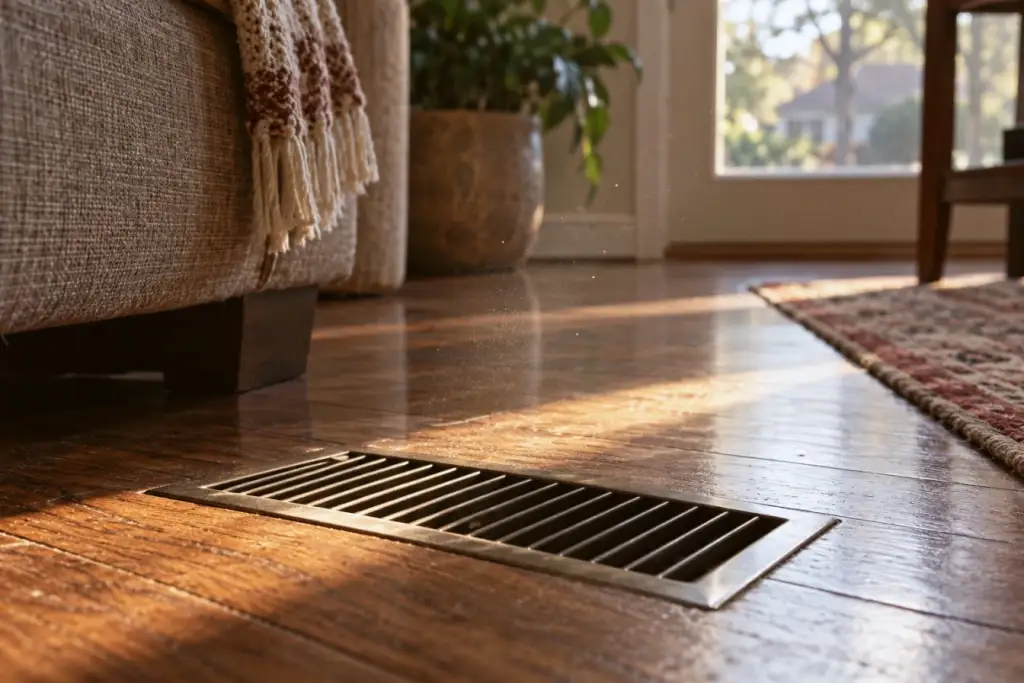
The first time the heat runs each season, dust that settled on the heat exchanger or heating elements burns off. A faint, dusty, slightly burnt smell that fades within a short time is common and not a cause for concern. If it does not fade, or it returns every time the heat runs, have it checked.
An electrical or burning-plastic smell
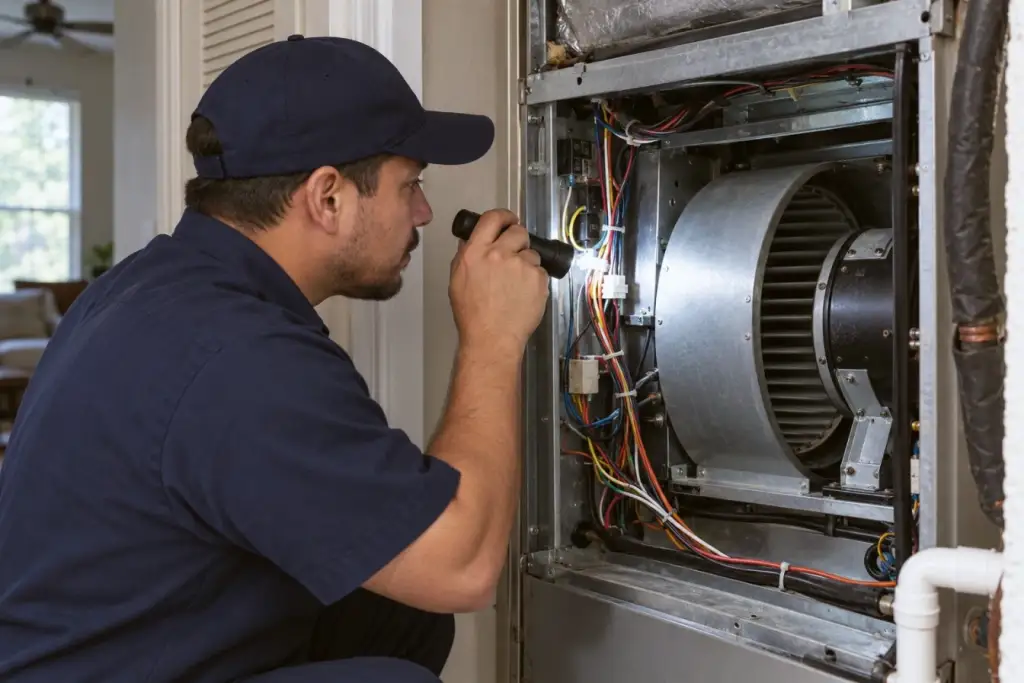
A sharp smell like hot plastic or burning wiring can point to an overheating motor, a failing electrical part or damaged wiring. Switch the system off at the thermostat, and if the smell continues, switch off the breaker for the system. Then call for service. Do not keep running a system that smells electrical.
A burning rubber smell
On some older systems the blower is driven by a belt, and a slipping or worn belt can smell like burning rubber. A seized motor can produce a similar smell. Switch the system off and have it checked.
Smoke
If you see smoke, or the smell is strong and getting stronger, switch the system off, leave the home and call 911. Smoke alarms are there for exactly this reason.
Musty or damp smells
A musty smell when the air conditioner runs usually points to moisture: a slow condensate drain, standing water in the drain pan, or a damp filter or duct. It is not an emergency, but it is worth having checked, because standing water can damage ceilings and floors.
Carbon monoxide has no smell
Carbon monoxide, which can come from fuel-burning appliances that are not venting correctly, is odorless and colorless. You cannot rely on your nose to find it. If your home has a gas furnace, gas appliances, a fireplace or an attached garage, carbon monoxide alarms are essential. The U.S. Consumer Product Safety Commission recommends them on every level of the home and outside sleeping areas. If an alarm sounds, get everyone outside into fresh air and call 911.
A quick guide
- Rotten eggs or sulfur: leave the home, call the gas utility or 911 from outside.
- Dusty, at first heat, fading: usually normal.
- Hot plastic or electrical: switch off at the thermostat and breaker, then call for service.
- Burning rubber: switch off, call for service.
- Smoke: switch off, leave, call 911.
- Musty or damp: book a check of the drain and indoor unit.
Common questions
Why does the house smell like burning dust only on the first cold morning?
Dust settles on the heat exchanger or heating elements during the months the heat is not used. The first run burns it off. It is common, and it should fade quickly. Changing the filter before the season helps.
Can an air conditioner smell like burning?
Yes. An overheating fan motor, a failing capacitor or a damaged wire in the outdoor or indoor unit can produce a burning or electrical smell in summer too. Switch the system off and call for service.
What does a carbon monoxide alarm sound like?
Most alarms sound a distinct pattern, often four beeps and a pause, that is different from a low-battery chirp. Check the label on your alarm so everyone in the household knows the difference.
Should I open the windows if I smell something?
For a gas smell, leave the home first; opening doors as you leave is fine, but do not stay inside to open windows. For other smells, switching the system off and ventilating the room is reasonable while you arrange a visit.
What about a musty smell?
A musty or damp smell when the system runs often points to moisture: a slow condensate drain, standing water in the drain pan, or growth on the indoor coil or in the ducts. It is not an emergency, but it is worth having the drain and coil checked, because the same moisture can lead to leaks.
Where should carbon monoxide alarms go?
The U.S. Consumer Product Safety Commission recommends a CO alarm on each level of the home and outside sleeping areas. Follow the manufacturer’s instructions for placement, test the alarms regularly, and replace them at the end of their stated life.
Related service
Heating Repair
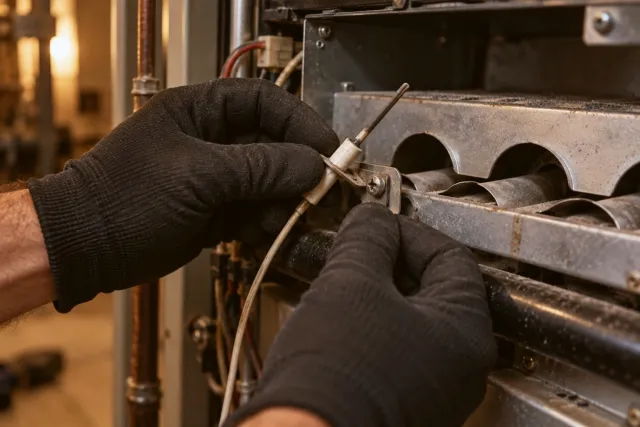
Request help evaluating a heating system that will not start or is not warming the home as expected.
More from the Journal
-
 Heating
Getting your heater ready for a San Antonio cold snap
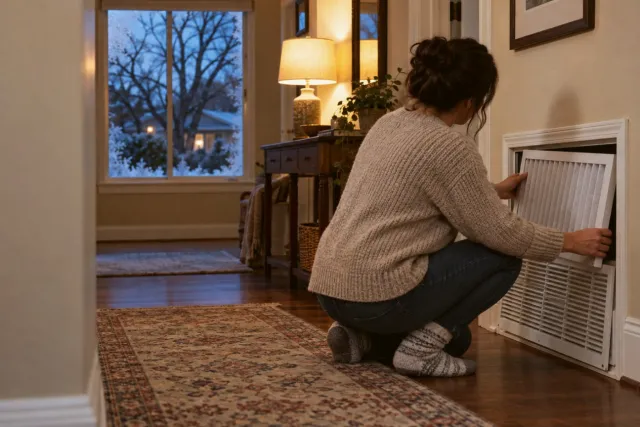
San Antonio heaters sit idle for most of the year, so problems show up on the first cold night. A few simple checks in the fall make that night much calmer.
-
 Cooling
Why is my AC blowing warm air?
Warm air from the vents has a handful of common causes, from a thermostat setting to a failed part at the outdoor unit. Here is what you can check safely, and what is worth a visit.
-
 Maintenance
How often should you change your air filter in San Antonio?
There is no single right number of weeks. A long cooling season, pets, pollen and the type of filter all change the answer. The simplest rule: check it monthly and change it when it looks dirty.

Next step
Let’s make the next step clearer.
Tell us what your system is doing and what kind of help you need. Coverage and appointment details are confirmed after contact.